
Port Orange, FL · Garage Door Service
When a Spring Goes in Cold Weather in Port Orange
Port Orange's housing dates mostly to 1972-1994, and this area's mild climate hides how a rare cold snap can snap an aging torsion spring without warning.
- Repairs & new doors
- Springs & openers
- Serving 5 nearby communities
The Problem
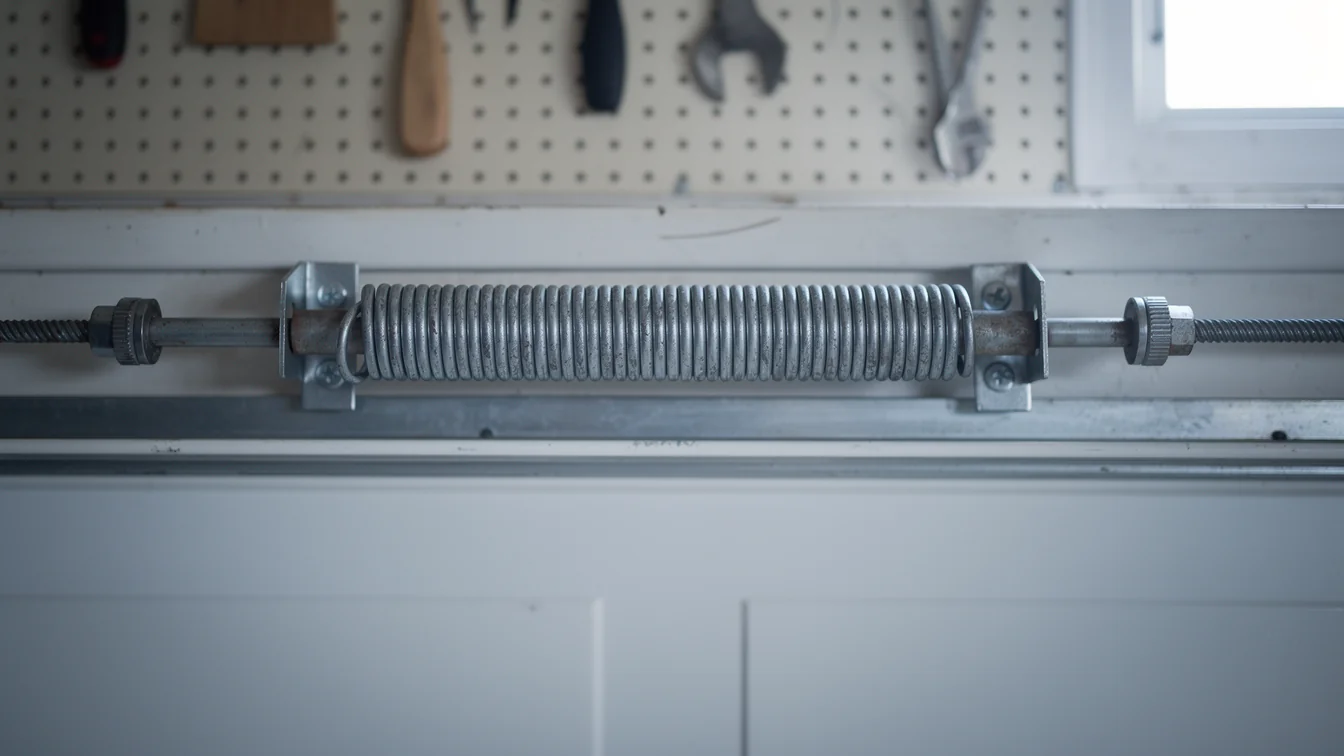
Most of the housing stock around Port Orange went up between 1972 and 1994, with the bulk of it clustered in the late 1980s across the eleven or so named areas that make up this service area. That means a lot of the torsion springs out there are original, or close to it - thirty, forty, even fifty years of steel under constant tension. Springs don't fail because of one bad day. They fail because they've been wound tight since the Reagan administration and something finally gives. A cold snap is often what finally gives it. Steel contracts when the temperature drops, and a spring that's already fatigued from decades of cycling loses whatever margin it had left. You hear a bang, the door won't move, or it slams down on its own. None of that is dramatic weather. It's old hardware meeting a temperature swing it was never asked to handle before.
The honest part of this: we can't tell you a spring is about to go. There's no inspection that catches a thirty-year-old spring a week before it snaps. What we can tell you is that the age of the stock here means it's a when, not an if, for a lot of these doors.
When It Stops Being a DIY Job
A torsion spring under tension can break a hand or worse, and that doesn't change no matter who's turning the wrench. If your door won't open, if it's heavy on one side, or if you hear that bang and then nothing, stop there. Don't try to wind or unwind a spring yourself, and don't prop the door open and work underneath it.
Where this gets specific to a house built in the 1972-1994 window: a lot of these doors still have their original hardware, which means original brackets, original cable drums, sometimes original openers bolted to wood that's seen forty years of Florida humidity along with the occasional cold morning. Replacing a spring on a door like that isn't always a clean swap. Sometimes the drum or the shaft has to come out too, because the parts are worn past matching a new spring correctly. If your door is from that era, treat any spring failure as a full-system check, not a part swap.
Where People Go Wrong
The most common mistake we see isn't about tools, it's about matching the spring to the door. A lot of these 1980s and early-90s doors were lighter than what's built today, and a spring bought off a shelf without checking the door's actual weight and the drum size ends up wrong - too weak, too strong, or the wrong wind. On a door this old, the original spec plate is often gone or unreadable, so guessing is common.
The second mistake is lubricant. People spray the spring itself thinking it'll loosen up and last longer. It doesn't buy real life back on a spring that's already near its cycle limit, and oil on a torsion spring can actually mask the surface rust that tells you how close it is to failing.
One limitation worth saying plainly: we don't stock every obsolete spring size for every decades-old door. Some of the oddball setups from that era take a day or two to source. If your door is one of the stranger original builds, ask up front rather than assuming same-day.
How Local Conditions Play In
Port Orange sits in a mild temperate band, which cuts both ways for garage doors. Nobody here deals with the deep freeze that snaps springs every winter in colder states, so the hardware doesn't get stress-tested the way it would up north. That sounds like a good thing, and mostly it is. But it also means homeowners here have no instinct for what a cold snap does to old steel, because it almost never happens. When a rare cold morning does hit, it catches a thirty-to-fifty-year-old spring that's never had to contract that hard before, and that's often the day it lets go.
Across the roughly 52,035 households in this service area, with a median income around $70,911, the math on an old spring usually comes down to repair versus full replacement. A spring on a door that old rarely fails alone - cables, rollers, and the opener itself are usually on the same clock. We'll tell you straight if a spring swap is worth it or if the door's age means replacement makes more sense.
Frequently asked questions
Why did my spring break on a cold morning when it's barely ever cold here?
Port Orange's mild climate means springs rarely get tested by real cold, so when a rare cold snap hits, a spring that's already decades old and fatigued from normal use loses its remaining margin faster than it would on a mild day. The cold isn't the whole cause - age is - but it's often the trigger.
My house was built in the 1980s. Is the spring still original?
It's common. A lot of the housing stock in this area dates to 1972-1994, and plenty of those doors still have original torsion hardware. If no one's replaced the spring since the house was built, it's worth having it checked, since original specs can be hard to read after forty years.
Can I just replace the spring and leave the rest of the door alone?
Sometimes. On a door that old, the drum, cables, and bearing plates have usually worn alongside the spring. We'll check the whole system before quoting just a spring, because replacing one worn part next to three other worn parts often means a second call soon after.
Related garage door services in Port Orange
More garage door guides
Book garage door service in Port Orange
Call now or request a quote - tell us what the door is doing and where you are.