
Port Orange, FL · Garage Door Service
Why So Many Port Orange Garage Doors Have No Insulation At All
Port Orange homes mostly date to 1972-1994, before insulated garage doors were standard. Here's what that means for repair, replacement, and upkeep today.
- Repairs & new doors
- Springs & openers
- Serving 5 nearby communities
The Problem
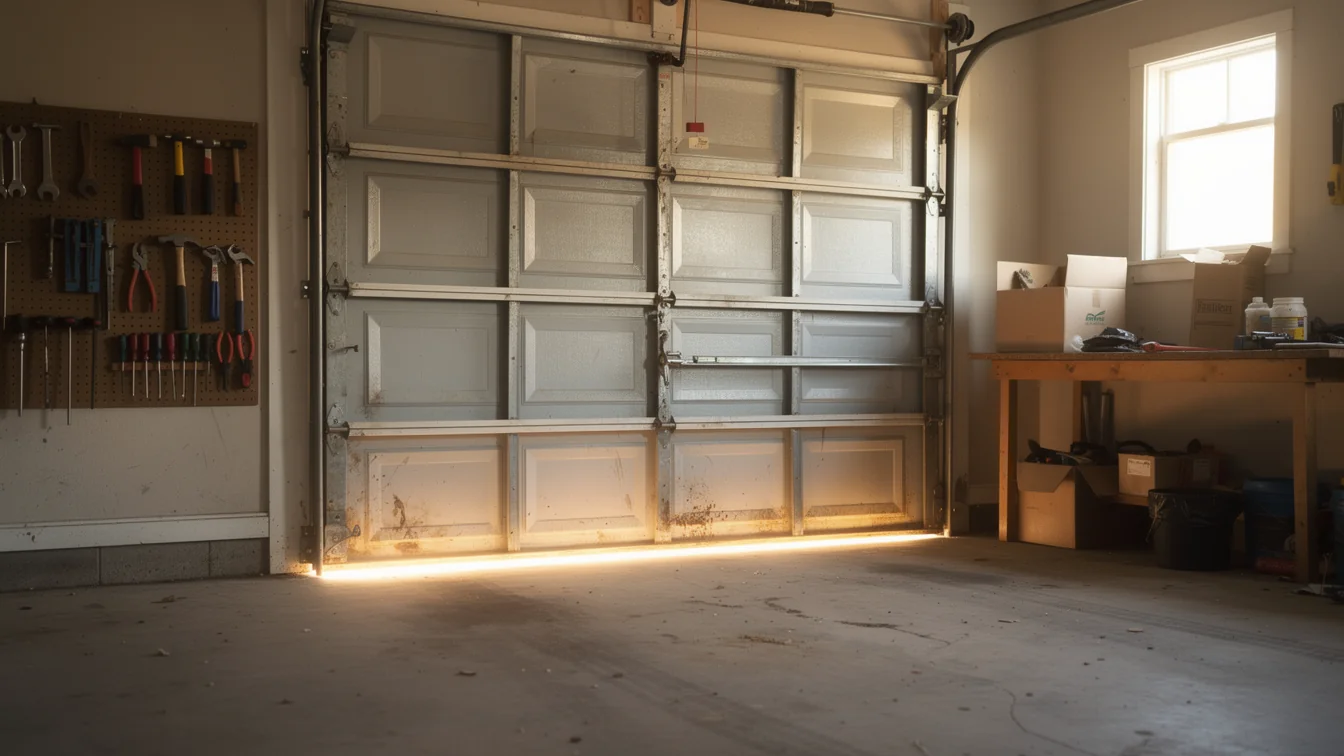
Most houses in Port Orange went up between 1972 and 1994, with a median build year of 1987. That matters because insulated garage doors weren't a standard spec for most of that stretch. Builders hung single-layer steel panels - no foam core, no thermal break - because nothing required otherwise and nobody was paying extra for it. Across the eleven areas that make up this market, from South Daytona four miles off to Oak Hill twenty miles out, the housing is mostly 1980s and 90s construction, so this isn't a problem limited to one neighborhood. It's the norm. You can usually tell by weight: pick up the bottom of an original panel and if it feels thin and hollow, that's your answer. These doors aren't failing because they're bad doors. They're doing exactly what a single-skin steel panel from 1987 was built to do - which was never to insulate anything. The gap shows up as noise, as dents that don't pop back, and as a door that feels loose in the track compared to anything made in the last fifteen years.
When It Stops Being a DIY Job
Swapping a damaged panel on an original 1980s-era door sounds simple until you call around and find the matching panel profile hasn't been made in decades - a real limitation worth knowing before you start. At that point you're not doing a repair, you're sourcing a part that doesn't exist, and the honest move is usually a full door rather than a patch. Where it does stay a weekend job: lubricating hinges, tightening loose hardware, swapping worn rollers. Where it stops being one: anything involving the torsion spring, because a door built in the 1980s or 90s was sized for a bare steel panel, and if the owner adds a heavier insulated replacement without checking the spring rating, the opener will strain and the spring will wear out early. That's a call, not a weekend project. We won't pretend every job is simple - some original frames are out of square enough that a new door needs trim work most owners don't want to take on themselves.
Where People Go Wrong
The common mistake is treating an insulated upgrade like a straight swap. It isn't. A door built for Port Orange's median 1987 construction was matched to a specific spring weight and track depth for a thin steel panel. Drop in a heavier insulated door on the old spring and hardware, and the opener fights it every time, which shortens the life of the whole system, not just the door. The other mistake is cosmetic-only thinking - repainting or patching a dented original panel without checking whether the track and rollers underneath have kept pace. On housing this age, the door skin and the drivetrain don't always wear at the same rate, and fixing only what's visible leaves the real problem alone. With median household income across this service area sitting at $70,911, a full door swap is a real budget decision, which is exactly why getting the spring and track sized correctly the first time matters more than it would on a cheap fix.
How Local Conditions Play In
Port Orange sits in a mild temperate band, so the case for insulation here isn't the same pitch you'd hear somewhere with hard winters. Nobody's garage door here is the reason a furnace runs nonstop. The real argument is sound dampening and panel rigidity - a foam-core door doesn't boom when it closes and doesn't dent as easily from an errant bump, which matters more in a climate that doesn't put extreme stress on materials in other ways. Because temperature swings are mild rather than severe, the original 1980s steel panels in this market haven't warped the way uninsulated doors do in climates with harsh freeze-thaw cycles. That's one reason so many of them are still in service forty years on - they're tired and noisy, not structurally failing. It's a reasonable call to prioritize an insulation upgrade for comfort and quiet rather than treating it as urgent protection against weather damage, which it generally isn't here.
Frequently asked questions
Is my garage door too old to insulate instead of replace?
Depends on the door, not just the age. If the panel is a single steel skin from the 1980s or 90s, you can sometimes add a foam insulation kit, but it won't match factory results and it adds weight the original spring wasn't sized for. We check the spring rating first - if it's undersized, a full door often makes more sense than retrofitting insulation.
Why does my original garage door sound so loud when it closes?
Houses built here between 1972 and 1994 mostly got single-layer steel doors with no foam core, so there's nothing to deaden the sound of the panel hitting the floor or the rollers in the track. It's not a malfunction - it's the original design. An insulated replacement cuts the noise noticeably.
Does Port Orange's climate mean I need an insulated door?
Not for temperature reasons. This is a mild temperate area, so insulation isn't fighting extreme heat or cold the way it would elsewhere. The upgrade mostly pays off in noise reduction and a stiffer panel that resists denting, rather than any real energy bill difference.
Related garage door services in Port Orange
More garage door guides
Book garage door service in Port Orange
Call now or request a quote - tell us what the door is doing and where you are.