
Port Orange, FL · Garage Door Service
What a Service Call Actually Covers in Port Orange
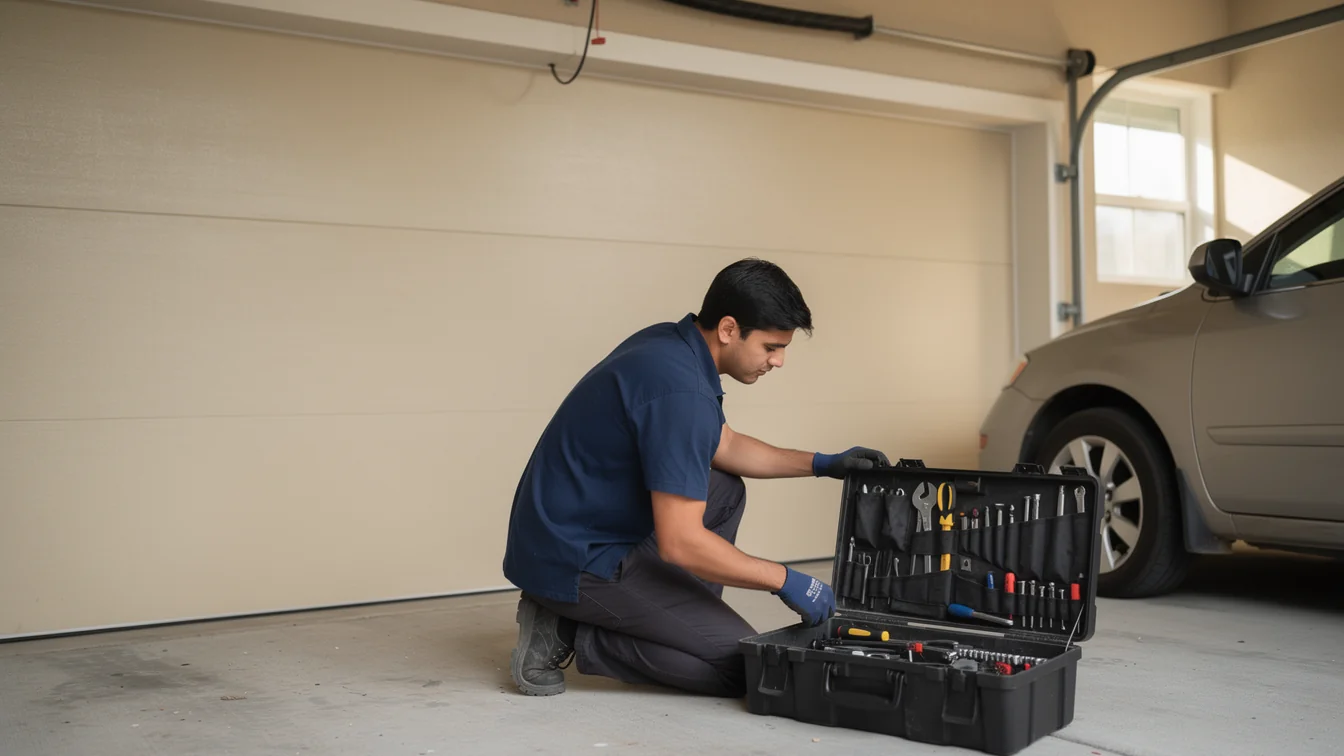
A look at what's actually checked during a garage door service call in Port Orange, where most homes date to the 1972-1994 build years and mild coastal air works on hardware year-round.
- Repairs & new doors
- Springs & openers
- Serving 5 nearby communities
The Problem
Most houses in Port Orange went up between 1972 and 1994, with the median sitting around 1987. That's a specific window, and it matters because doors and openers from that era are reaching the end of their expected service life at roughly the same time across the whole area. A spring rated for a certain number of cycles doesn't know what year it is, but if your house was built in the 80s, the odds are good the spring in it now is either original or a first replacement that's also aging out.
The call usually starts with one symptom: the door won't open, it opens crooked, or the opener runs but the door doesn't move. What a real service call covers is finding out which of maybe six things caused that one symptom, not just swapping the part that failed last time. On a torsion spring system from a house built in this window, that means checking the cable drums, the end bearing plates, and the track alignment together, because 35+ year old hardware rarely fails in isolation.
A diagnostic visit should end with you knowing what's worn, what's about to go, and what's fine. If a tech can't explain which of those three categories each part falls into, that's not a full call.
When It Stops Being a DIY Job
Lifting the door manually to check spring tension, lubricating hinges, tightening loose bolts on the track brackets - a homeowner can do all of that safely. Torsion springs are different. A door built in the 1972-1994 stock, with original or near-original hardware, is carrying spring tension that's been doing its job quietly for decades, and winding bars and a spring under full load are not a weekend project.
The other line is the opener's logic board and safety reversal system. If the door reverses when it shouldn't, or doesn't reverse when it should, that's an electrical and mechanical diagnosis together, not a single bad sensor you can swap from a box.
Honest limitation: we don't recommend DIY spring replacement on any door, regardless of age, and we won't walk someone through it over the phone. It's the one repair where a mistake causes real injury, not just a redo.
Where People Go Wrong
The most common mistake we see in Port Orange homes is replacing a single visible part - a roller, a cable - without checking what else on a 30-to-50-year-old system is near failure. Given that most of the service area's housing stock across the 11 named communities dates to the 1980s and 90s, a door that's getting its first major repair now is often getting its second or third part replaced on hardware that was never upgraded past the original install.
The other error is treating every noise as an opener problem. A worn roller or a slightly bent track will make an opener strain and sound like it's failing, when the actual fix is $20 in hardware, not a new motor unit. A real service call checks the track and rollers before it blames the opener.
Last one: skipping the balance test. A door that's out of balance puts extra load on the opener every single cycle, which shortens its life even if nothing is visibly wrong today.
How Local Conditions Play In
Port Orange sits in a mild temperate climate band, which is a break compared to places with hard freeze-thaw cycles - we don't see the seasonal metal contraction that cracks welds or seizes springs elsewhere. That's the good news for the 30,432 owner-occupied houses in this service area.
What mild temperate still means, though, is steady humidity and salt-tinged air this close to the coast working on exposed hardware year-round, with no winter cold snap to slow corrosion down. Springs, hinges, and track bolts on houses built in the 1972-1994 window have had anywhere from 30 to 50 years of that steady exposure, with nothing to pause it. A service call out here checks for surface rust on springs and hinge pins as a matter of course, not as an afterthought, because that corrosion is a slow, continuous process rather than a seasonal one.
Frequently asked questions
How do I know if my door needs a repair or a full replacement?
If the door is original to a house built in the 1972-1994 window and multiple parts are worn - spring, rollers, and track all showing age - replacement often costs less over time than repeated repairs. A single worn part on an otherwise sound door is worth fixing instead.
Why does my opener strain even though it's new?
A new opener fighting an old, out-of-balance door will strain no matter how good the motor is. Check the track and rollers first; a balance problem on older hardware puts load on the opener that has nothing to do with the opener itself.
Does Port Orange's climate affect garage door hardware?
The mild temperate climate here means no hard freeze-thaw cycle, but steady humidity and coastal air work on exposed metal year-round. Houses in the service area built decades ago show corrosion on springs and hinges as a slow, continuous process rather than sudden seasonal damage.
Can I replace a torsion spring myself?
No. Torsion springs hold enough tension to cause serious injury, and that's true regardless of the door's age. We don't recommend DIY spring work and won't talk a homeowner through it by phone.
Related garage door services in Port Orange
More garage door guides
Book garage door service in Port Orange
Call now or request a quote - tell us what the door is doing and where you are.